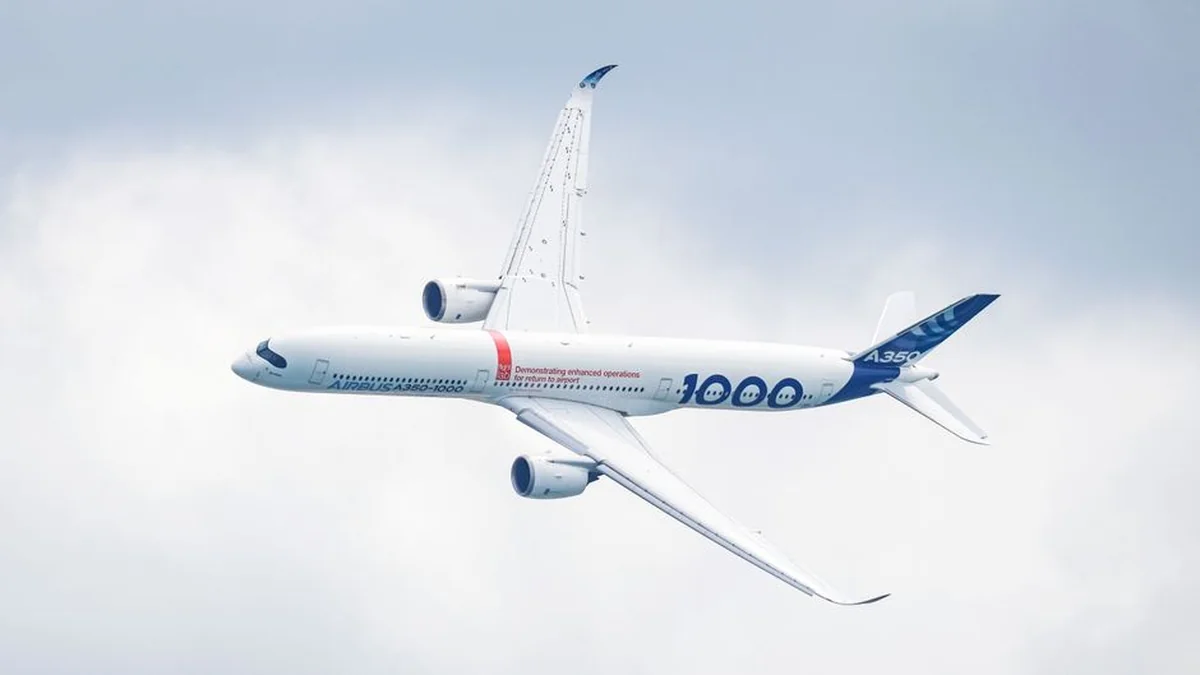
At the Farnborough Airshow, Airbus presented updated information regarding its Future Wing project, a development effort spanning the last twelve years. Project leader Sue Partridge detailed that the proposed Future Wing design is engineered to be longer, lighter, and thinner than current models. Currently, the Airbus A320neo boasts a wing span of 35.8 meters; the successor could expand this span to approximately 45 meters.
The integration of longer, more aerodynamically efficient wings is projected to significantly reduce air resistance across the aircraft. This reduction in drag translates directly into lower fuel consumption and decreased emissions for the next generation of narrow-body aircraft. According to Airbus projections, these advancements could enable the new aircraft to achieve a fuel efficiency improvement ranging from 20 to 30 percent compared to existing models.
However, the increased physical dimensions present a notable logistical hurdle. The extended span of the proposed wings means that many existing airport infrastructure facilities may lack the necessary physical space to accommodate the aircraft. This presents a key consideration for the deployment of this advanced air mobility solution.
The successful integration of these advanced wings into the operational fleet will require corresponding upgrades to airport gate and taxiway infrastructure to realize the full potential of this future technology from Airbus.
Topics: #airbus #future #wings