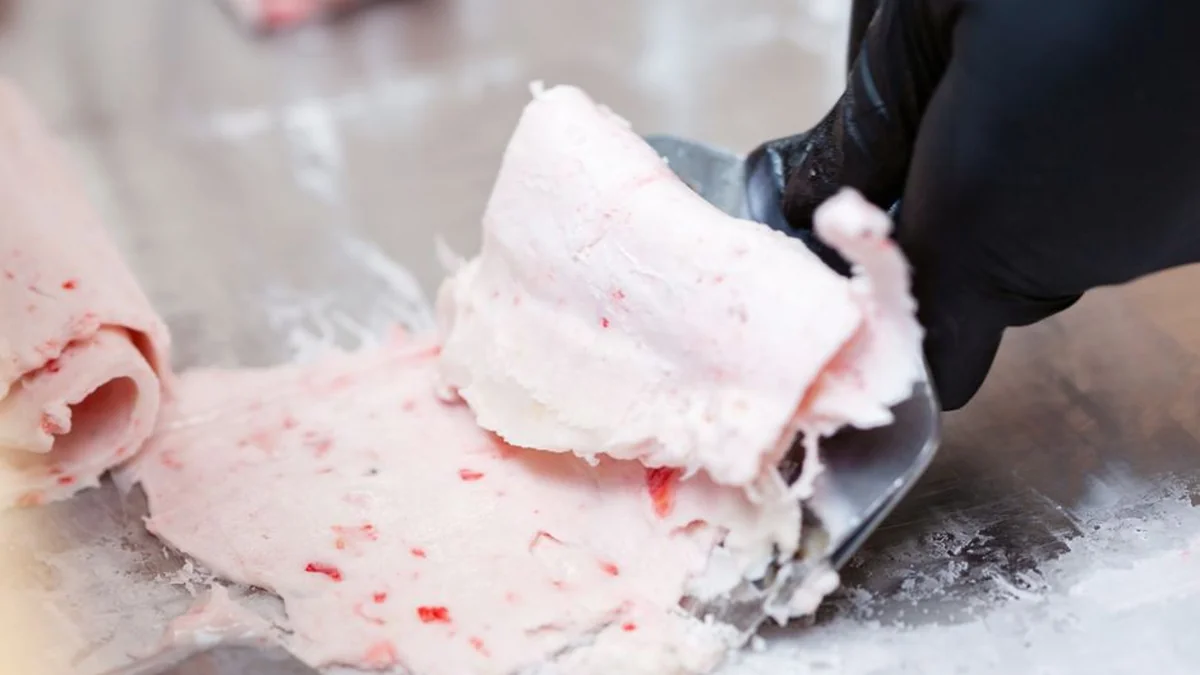
The composition and preparation methods for ice cream have undergone notable changes in recent years, affecting not only its taste and appearance but also its fundamental ingredients. According to Nadja Škrk of the Office for Food Safety, Veterinary Medicine and Plant Protection, fresh eggs are seldom found in contemporary ice cream products. Instead, these items are formulated using highly processed raw materials, primarily milk, cream, and various prepared bases.
These shifts in production are reflected in the industrial preparation process, as noted by Mateja Jerovšek, owner of Gelaterie Romantika. Jerovšek observes that modern flavoring techniques are significantly different from historical methods. She explains that flavors, such as those for tiramisu or strawberries, are often sourced from large containers that must be mixed with water, milk, or a milk base before use.
In contrast, Jerovšek’s establishment maintains a commitment to a different methodology, relying on fresh and fundamental ingredients. This approach contrasts sharply with the large-scale industrial preparation. The disparity highlights a divergence between mass-produced goods and artisanal quality.
While the industry utilizes processed components to maintain consistency in its ice offerings, some establishments continue to prioritize basic, fresh elements in their recipes.
Topics: #cream #ice #preparation